When AI Meets Ambiguity: Why Financial Services Can’t Automate What They Don’t Understand
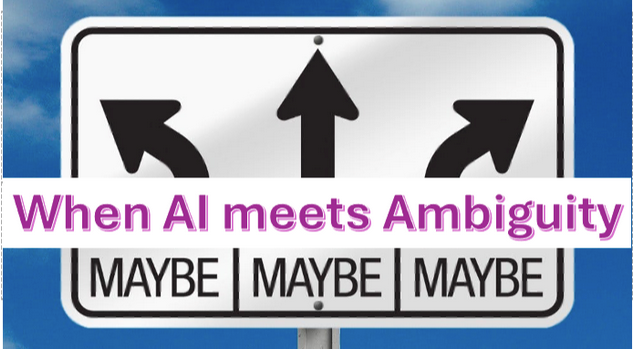
Most financial institutions proudly announce that they are investing heavily in Artificial Intelligence, data platforms, and automation. They talk about predictive analytics, cognitive underwriting, self-learning risk models, and AI-driven personalisation.
Yet behind the scenes, something doesn’t quite add up.
Algorithms are built, dashboards are launched, bots are deployed — but the business outcomes often fall short. Models misclassify risk. Fraud engines overflag false positives. “360° customer views” still produce 270° blind spots.
The paradox is simple but dangerous: AI is getting smarter, but the business meaning behind the data remains confused.
You can’t automate what you don’t fully understand.
The Hidden Variable in AI: Meaning
Machine learning doesn’t truly understand anything. It recognises patterns — and those patterns depend entirely on how data is defined, structured, and interpreted. When the meaning of that data is inconsistent, the model learns the wrong lesson.
Consider a few examples across financial services:
- In a global bank, “exposure” can mean something entirely different in credit risk, market risk, and operational risk. The same term drives different data feeds and, therefore, conflicting risk reports.
- In insurance, “claim incident” may mean “first notice of loss” in one business unit, “settled claim” in another, and “open file” in a third.
- In wealth management, “customer segment” and “risk profile” fields vary between CRM, product, and compliance systems — causing robo-advisors to offer unsuitable product recommendations.
Each system is accurate in its own context. Yet across the enterprise, the AI model ends up drawing false correlations because it doesn’t understand that the same word carries multiple meanings.
The outcome: smart machines acting on dumb assumptions.
Beyond Data Quality — The Rise of Semantic Quality
Data teams often focus on data quality — completeness, accuracy, timeliness. But in the age of automation and AI, a new dimension matters even more: semantic quality — the consistency of business meaning.
Semantic quality asks:
“Do the business, the data platform, and the algorithm all interpret this concept the same way?”
If the answer is no, no amount of data cleansing or transformation can save you.
Imagine a credit risk AI that classifies a “customer” as the legal entity in one system and as a broker account in another. The model may technically run without error, but the insights are meaningless — even dangerous.
The problem isn’t poor data quality; it’s semantic debt.
Semantic debt accumulates when definitions diverge, when “customer,” “exposure,” or “policy” mean different things across departments. The more automation you build on top of it, the faster the cracks spread.
Why AI Governance Starts with Business Architecture
AI governance has become a hot topic — but most frameworks still start too late. They begin with data science controls instead of business meaning.
Real AI governance starts with Business Architecture — defining what the enterprise actually means by its core concepts before those concepts enter data pipelines or machine learning models.
Three enablers make this possible:
- A Common Business Glossary The shared vocabulary that defines terms such as “Customer,” “Policy,” “Exposure,” or “Transaction.” Without this, each AI model invents its own semantics.
- A Business Information Model (BIM) This connects business terms to processes, capabilities, and decisions — giving structure to how meaning flows through the organisation. It’s not a data model; it’s a meaning model.
- An AI Governance Framework Once semantics are standardised, governance ensures that every AI initiative uses data consistent with those definitions — enabling traceability, fairness, and auditability.
“Data scientists build models. Business architects ensure those models are grounded in meaning.”
Without this partnership, AI remains technically brilliant but strategically blind.
Case in Point: Lessons from Across Financial Services
1️⃣ Banking — Risk Aggregation and BCBS 239 : A global bank spent years struggling to reconcile its credit exposure reports under BCBS 239. Each region defined “exposure” differently — gross, net, post-collateral, pre-settlement. When the bank created a common business information model linking exposure definitions to products and business lines, reconciliation time dropped by 40%, and risk reporting became both faster and regulator-ready.
2️⃣ Insurance — Smarter Claims Intelligence: A UK insurer implemented a claims triage AI to predict fraud risk. But early results were erratic — high false positives and inconsistent outcomes. The issue wasn’t the algorithm; it was that “claim type” categories differed across products. By harmonising the glossary and aligning claims semantics, fraud alerts dropped by 25%, and accuracy improved significantly.
3️⃣ Wealth & Asset Management — Personalisation That Works: A global wealth firm’s robo-advisor was producing compliance breaches. The reason: “risk profile” meant different things to marketing (persona-based) and compliance (MiFID-based). A unified business glossary aligned both interpretations, enabling compliant personalisation and restoring regulator confidence.
In every case, the breakthrough didn’t come from better AI — it came from better alignment of meaning.
The Semantic Foundation of Trust
In financial services, trust is everything. Customers trust that their data is used fairly. Regulators trust that reports are accurate. Boards trust that insights are reliable.
But trust collapses when meaning drifts. A reconciliation failure, a wrong model classification, or a mislabelled dataset is often not a technical bug — it’s a semantic gap.
That’s why semantic integrity will define the next era of operational resilience. AI without semantic alignment isn’t just risky; it’s ungovernable.
The Call to Action: Before You Automate, Clarify
So before your organisation launches its next AI initiative or automation programme, ask three simple but uncomfortable questions:
- Do we truly know what our core business terms mean — and do all teams share that understanding?
- Are our algorithms and data pipelines using those meanings consistently?
- If an AI model produced a questionable result, could we trace it back to a clear business definition?
If not, your problem isn’t with data, models, or platforms. Your problem is with meaning.
Because in the end, the smartest system in the world can’t fix a dumb definition.
Closing Reflection
AI promises intelligence. But true intelligence — whether human or artificial — depends on clarity of understanding. In the financial services sector, that clarity doesn’t come from technology; it comes from business architecture.
This is the next step in the data-to-wisdom journey: where meaning becomes the foundation of automation, and business information becomes the language of intelligence.
Questions for you:
- Where does your organisation stand on semantic quality?
- Is your AI learning from meaning - or from noise?